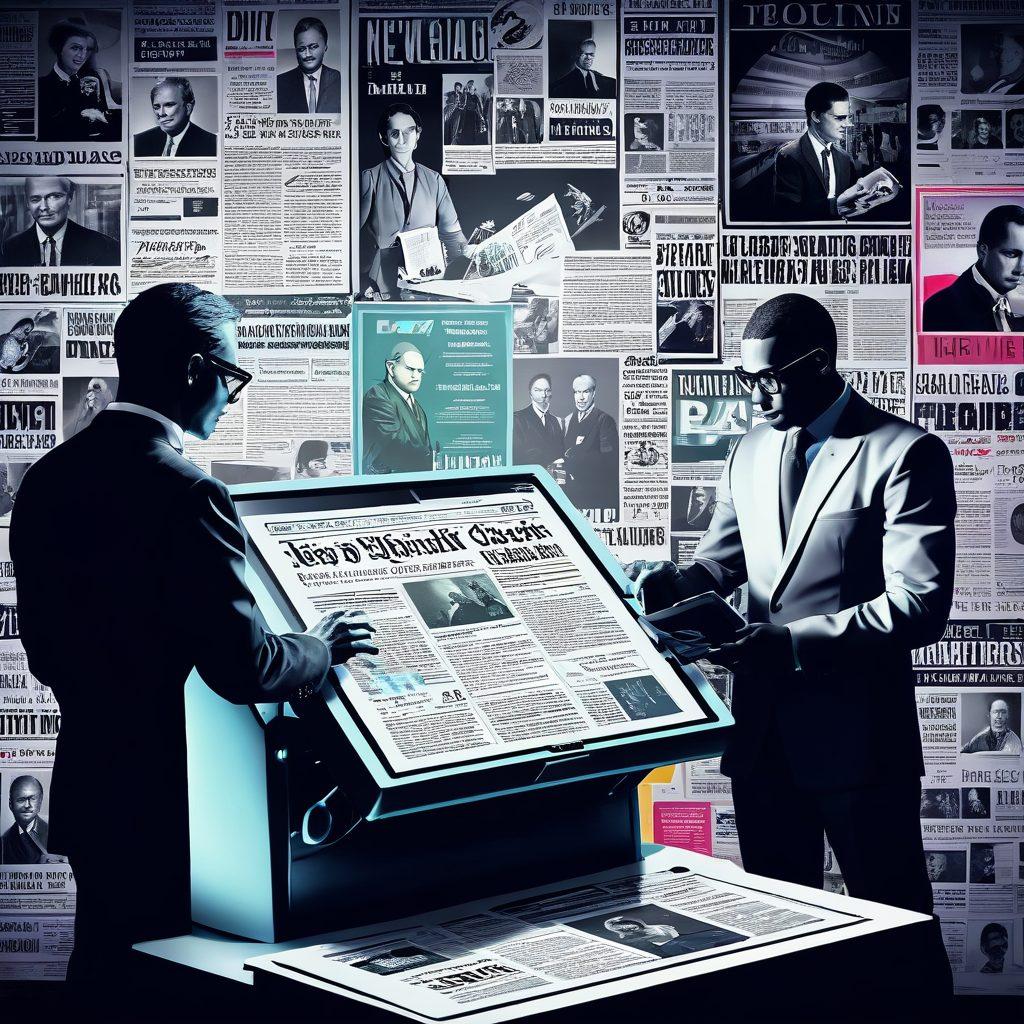
The Evolution of News: From Print Media to Digital Dominance
In the age of digital dominance, it's easy to forget the humble beginnings of news dissemination. Remember the satisfying rustle of a freshly printed newspaper or the smell of ink on newsprint? Print media once reigned supreme, heralding the days when information was a tangible entity that connected readers to the world around them. But how did we transition from those ink-stained pages to the sleek digital portals we engage with today? Tracing this journey reveals not only the evolution of news formats but also the impact it had on modern journalism—especially with the rise of online publications.
Initially, print media was a powerful tool for communication in society. Newspapers were the pulse of communities, delivering local news and national headlines directly into the hands of the public. Feature articles painted vivid pictures of events, while editorial writing provided a platform for public discourse. Through weekly news roundups, investigative journalism, and hard-hitting news analysis, print media established itself as a credible voice of authority. But as technology advanced, could it have predicted the seismic shift that was about to change everything?
Enter the world of digital news, where immediacy reigns and news articles are often live-updated to keep pace with breaking news. The transition wasn't immediate; it required media outlets to adapt, evolve, and sometimes, reinvent themselves. Imagine journalists once scurrying to meet deadlines for print runs now using their smartphones to capture real-time stories. Online publications opened the floodgates for diverse voices in news commentary and opinion pieces, leading to a rise in news blogs that allowed anyone with a voice to impact the conversation.
As readers began to gravitate more towards convenience and accessibility, the format of news consumption evolved. Local news, once confined to regional print publications, now finds itself just a click away in an overwhelming sea of online content. The nature of news commentary today invites questions—has the accessibility of news diluted its quality? Are we losing the art of investigative journalism in favor of sound bites? The ability to share and amplify stories through social media platforms has shifted the power dynamic from established publications to the masses. The race for clicks and shares has forced media outlets to reconsider their strategies—an apparent double-edged sword.
Today, we stand at a crossroads where the lessons of print media can guide the future of digital journalism. As we embrace the innovations of online news, it’s crucial to remember the principles that have anchored journalism for centuries: integrity, thoroughness, and a commitment to inform the public. Publications must strive for balance, maintaining the rigor of traditional journalism while embracing the potential of digital storytelling. From breaking news updates to in-depth feature articles, the evolution from print media to digital dominance reminds us that while formats change, the core mission to provide timely and relevant news remains timeless.
From Newspapers to News Blogs: The Shift in How We Consume Current Events
Imagine this: it’s a Friday evening, and you’re lounging on your couch, sipping a warm cup of tea, when you wholeheartedly decide to catch up on the week’s events. How do you begin? Do you reach for the familiar, crinkly pages of a newspaper or scroll through your smartphone to catch the latest on a news blog? This shift in how we consume current events is not just a personal preference; it’s a significant evolution in the landscape of news and media that has unfolded over the past few decades. In this discussion, we’ll explore the transition from the tactile experience of print media to the immediacy and convenience of digital news.
Gone are the days when local news was primarily delivered via the morning paper. The entry of news blogs has revolutionized the way we interact with news articles—no longer bound by the constraints of publication schedules. Instead of waiting for a weekly news roundup, we now have the luxury of accessing breaking news, feature articles, and news commentary at a moment’s notice. With this transition, many may wonder: Are we better informed or simply overwhelmed by the abundance of information at our fingertips? This is the dual-edged sword of our digital age, and it’s a question worth contemplating as we dive deeper into the evolution of news consumption.
At the heart of this transformation is the rise of online publications and news outlets that prioritize fast-paced reporting. Investigative journalism and editorial writing still hold their ground, but now, they compete not only with each other but also with social media feeds filled with press releases and instant updates. For every nuanced news analysis you might find on a reputable site, there’s a myriad of short columns and catchphrases meant to capture attention quickly. It’s a fascinating dichotomy where thorough reporting is pressured by the need for speed. We need to examine: how do we discern quality amidst the deluge of information?
Moreover, the landscape of news has begun to reflect a more dynamic form of storytelling. With the advent of multimedia – think videos, podcasts, and interactive graphics – the traditional formats we associate with print media are evolving into immersive experiences. Digital news now encompasses a broader spectrum, allowing consumers to engage with local news, national news, and beyond in ways that are immediate and engaging. As readers, we have the responsibility to seek out dependable media outlets that present not just the headlines but also the nuanced stories behind them. How do we become discerning consumers of news in this fast-paced atmosphere?
In conclusion, the shift from newspapers to news blogs represents more than just a change in format; it’s a transformation in our relationship with the information we consume. Armed with this knowledge, readers ought to empower themselves by understanding the strengths and weaknesses of their news sources—this may involve diving deeper into investigative journalism or simply following a local news blog that keeps them connected to their community. As we navigate this complex landscape, let’s remember one vital truth: in a world awash with information, the quest for meaningful news begins with us—the readers. So the next time you sit down to catch up on the news, ask yourself: what story do I want to hear today?
Breaking Barriers: The Rise of Digital Dominance in News Reporting
In a world where the rapid pace of technology shapes our daily lives, the media landscape has undergone an extraordinary transformation. Gone are the days when news was primarily consumed through print media, with ink-stained fingers flipping through the pages of a morning newspaper. Today, we find ourselves in the age of digital dominance, where breaking news, feature articles, and news commentary are just a click away. How did we evolve from static newspapers to dynamic online publications, and what does this mean for the future of journalism?
Digital news has become the lifeblood of information today, propelling us to stay updated with current news at the speed of a tweet. Imagine a world where you hear about breaking news before even having your morning coffee or cruising through local news while riding the subway. Digital platforms not only amplify the reach of news articles but also democratize information sharing, allowing voices from diverse backgrounds to contribute through news blogs and online publications. As media outlets adapt to this new landscape, they must grapple with the question: How can they maintain credibility and engage their audiences while navigating the challenges of a digital-first world?
Every journalist worth their salt has faced the daunting task of investigative journalism and editorial writing, nervously tapping away at their keyboards, crafting compelling narratives that captivate and inform. The rise of digital dominance has allowed for a thrilling interplay between traditional journalism and emerging formats. From interactive news analysis to multimedia features, the format of news has drastically changed, but the essence remains—the pursuit of truth and transparency. Are we sacrificing depth for brevity as attention spans wane in the digital age, or has the digital revolution birthed a new era of storytelling?
Let’s not forget the impact of news commentary and columns which have flourished in the realm of the internet. They have become vital tools for discourse and expression, offering insights and perspectives that might not have found their way into conventional print media. Weekly news podcasts and live streams now fill our feeds, and press releases are no longer relegated to the dusty corners of inboxes. In the bustling world of digital media outlets, how do we draw the line between persuasive commentary and factual reporting?
What does this mean for aspiring journalists and seasoned publications alike? With the rise of the digital landscape, a vast array of opportunities awaits. However, it comes with responsibility. To thrive, journalists must embrace new tools and technologies, honing their skills in investigative reporting while remaining steadfast in their commitment to ethical journalism. In this exciting era of news reporting, we must ask ourselves—how do we ensure that the evolution of news continues to empower rather than mislead its audience? As we move forward, the possibilities for innovation within news outlets are endless, and the future of journalism is in our hands.